The Real Benefit of Hiring an Adjuster-Licensed Roofing Team
Property owners across Burleson, Fort Worth, Dallas, and the broader DFW metroplex face a hard truth after hail season. A roof fix is not just construction. It is also an insurance event with rules, timelines, and documentation that decide what gets paid. That is where an adjuster-licensed roofing team changes outcomes. When a contractor reads scope lines in Xactimate like a desk adjuster does, flags missed line items in real time, and understands Texas Department of Insurance rules for HB3 compliance, claims tend to fund to the actual cost of a code-compliant, warrantable roof system. That is the real benefit. It is not a slogan. It is fewer supplements, cleaner approvals, and faster work in the field.
The need is strongest in places like Burleson and south Fort Worth. The I-35W and US 287 corridor gets frequent hail and wind. TPO, PVC, EPDM roofing, modified bitumen, and metal systems all take hits. A retail center on Wilshire Boulevard with active tenant leaks cannot wait for a second reinspection because the first estimate missed tapered insulation or edge metal code upgrades. An adjuster-licensed roofing team closes that gap on day one.
Why adjuster-licensed matters in North Texas
DFW sits in one of the most active hail belts in the United States. The market sees 8 to 12 hail events each year that produce stones at least 1 inch in diameter. Tarrant, Dallas, Collin, and Kaufman Counties rank among the highest claim frequencies in the country. The 2024 and 2025 seasons drove record commercial claim volumes from Burleson to Garland. A contractor who works the technical roofing problem and the claim problem at the same time shortens the path from first inspection to watertight completion. That shows up in the details.
Adjuster-licensed professionals document damage in the format the carrier expects. They estimate with the same software, Xactimate, that the carrier uses. They know the difference between Actual Cash Value (ACV) and Replacement Cost Value (RCV), and how recoverable depreciation is released. They recognize where code upgrades like adding a cover board or raising an overflow scupper must be written. They explain why a Carlisle, GAF, Firestone, Johns Manville, Versico, Sika Sarnafil, or Mule-Hide system requires certain components to qualify for a 20 to 30 year No Dollar Limit warranty. Those items are not contractor wish lists. They are manufacturer and code requirements that protect the building and the warranty.
Local conditions shape claim strategy in Burleson and the DFW metroplex
Burleson spans Tarrant and Johnson Counties and sits along I-35W, US 287, and SH 174. Logistics matter. Dispatch routes from Terrell on US 80 and I-20 into south Fort Worth, then down I-35W to 76028 and 76097, decide how fast a leak gets triaged when another storm rolls through at 2 a.m. A 24/7 commercial operation with field techs who carry proper safety gear and temporary dry-in materials is table stakes. An adjuster-licensed roofing team adds a second layer. It secures coverage for emergency services the right way.
When a hotel on Alsbury Boulevard needs same-night tarping and drain clearing, the invoice has to match insurer language. That means line items for labor hours, poly, sandbags at edges, and safety tie-off. It means photographs that show the condition before and after. It means reference to the local freeze or hail event date. A team trained in claim documentation makes that simple and fast so the owner gets reimbursed without a fight.
What breaks on commercial roofs after DFW storms
Loss patterns repeat across the metroplex. TPO membranes show hail bruising and punctures at field sheets and around protrusions. Heat-welded seams that looked fine in April can split by July after repeated wet-dry cycles. PVC membranes can suffer plasticizer loss, which is the chemical softener that keeps PVC flexible. EPDM roofing usually absorbs impact well when newer, but older sheets bruise and tear at stress points. Modified bitumen develops fractures at ridges and blisters. Built-up roofs show crushed gravel and ply slippage. Metal roofs see fastener back-out, bent ribs, and coating loss at panel laps. Parapet coping lifts and edge metal kinks at corners. Drains and scuppers clog with shingle grit from adjacent roofs and tree debris.
The fix depends on the roof system, age, and water path. A clean, warrantable repair blends manufacturer-approved patches with substrate work that stops water migration. That requires a thorough assessment. Infrared moisture surveys can map saturated insulation under intact membranes. Core samples confirm what the camera sees. A water test helps isolate a hidden lap failure or an HVAC curb leak masked by roof slope. Adjuster-licensed estimators bring those findings into the claim file in a way a carrier can use.
The claim timeline and where an adjuster-licensed roofing team makes the difference
Most commercial policies expect an inspection within 30 days of loss, followed by scope alignment and work authorization. Supplements are common once demo reveals hidden conditions. A contractor who understands both the technical roof and the claim process compresses each step. They schedule the adjuster meeting while moisture scanning is fresh. They price to current DFW labor and material rates within Xactimate rather than padding a separate spreadsheet. They connect manufacturer warranty requirements to line items so the carrier sees why a cover board, air barrier, or tapered insulation is not optional.
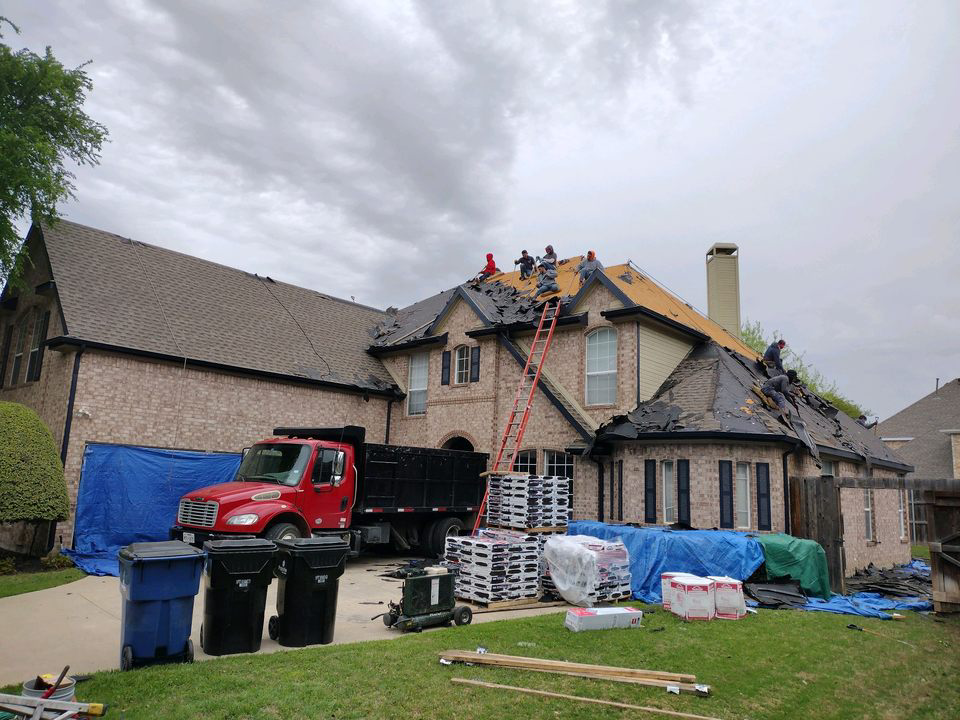
On larger roofs, it is not unusual to see claim ranges from $50,000 to over $2,000,000 depending on size, system type, and code upgrades. Getting the first scope right may shave weeks off the replacement schedule and prevent the dreaded second or third reinspection. In Burleson and south Fort Worth, that time saved often means beating the next storm rolling over I-20 and I-35W in late spring.
Shareable local insight: the south-slope problem on aging TPO
Field data across North Texas shows a pattern that surprises owners. Roughly 60 percent of TPO roofs older than 12 years develop measurable seam degradation along south-facing slopes first due to stronger UV exposure and heat loading. The problem accelerates on wide-span warehouse roofs with little shading and high summer temperatures. The visible symptom is minor seam pull at welds and fishmouths at laps. The practical effect is water migration under the sheet and into the cover board after a hail or wind event. An adjuster-licensed team documents this with weld probe tests, photographs, and infrared images so that the scope captures not just patching but also the necessary section replacement before the membrane unzips across a wind event.
Cost clarity helps owners set priorities
Owners need real numbers to prioritize repairs and decide if a full replacement makes sense. In the DFW market in 2026, typical commercial roof repair visits run $500 to $2,500 for single-point leak response. Multi-point repair campaigns run $1,500 to $6,000 when crews address parapet terminations, drains, and several patches. Partial section replacement runs $4 to $12 per square foot depending on system type and substrate repair. Full replacements vary by system. A 60-mil TPO system often ranges from $6 to $12 per square foot installed. PVC systems often run $8 to $14. EPDM systems range $7 to $13. Modified bitumen runs $10 to $18. Standing-seam metal ranges from $14 to $24. Spray polyurethane foam with coating often lands between $5 and $9. An adjuster-licensed roofing team uses those real ranges to guide claim strategy and warranty selection.
Warranty decisions require manufacturer fluency
North Texas heat and hail drive specific warranty choices. A GAF EverGuard TPO system with a Diamond Pledge warranty, a Carlisle Total Roofing System Warranty on Sure-Weld TPO or Sure-Seal EPDM, a Firestone Red Shield on UltraPly TPO or RubberGard EPDM, or a Johns Manville Peak Advantage warranty each come with component and installation rules. Many owners do not realize that moving from a 60-mil to an 80-mil membrane can open a 25 or 30 year NDL warranty window in some assemblies. That decision pays back across a typical commercial mortgage cycle. The adjuster-licensed roofing estimator links that warranty math to the claim scope so that the carrier sees the eligible standard rather than a discount build that will not survive the next hail cycle.
How the team builds a clean, defensible claim file
The best claim files read like a story the desk adjuster and reinspector can follow. They begin with a date-stamped site inspection and a roof plan that marks damage clusters. They include a photographic log, a moisture map from infrared scans, and core sample data that show wet insulation, deck type, and layer count. They show code citations for overflow scupper sizing, edge metal standards, and parapet coping requirements. They quote manufacturer details for curb flashing height and membrane terminations. They attach a side-by-side Xactimate estimate and a breakdown of manufacturer-required components for the selected warranty length. Adjuster-licensed roofing professionals build that file every day. It is routine, not a one-off effort.
Burleson-specific facility pressures
Burleson commercial properties along the Wilshire Boulevard and US 287 interchanges, and the Hidden Creek Parkway industrial corridor, carry a mix of old BUR and modified bitumen roofs from the 1970s to 1990s and newer single-ply roofs from the 2000s and 2010s. The older roofs tend to fail at ply slippage, blistering, and parapet terminations. Newer TPO systems show seam and curb flashing issues first. Hotels near I-35W and self-storage sites along Renfro Street and Alsbury Boulevard see heavy foot traffic and HVAC work that harms the membrane around curbs and pipe boots. Multifamily communities near Old Town Burleson need fast leak response to protect resident units and common areas. An adjuster-licensed contractor manages the full spectrum from emergency tarping to full tear-off, all while keeping the claim aligned to scope.
EPDM roofing and hail reality
EPDM roofing remains a solid option for many flat roofs in North Texas because it handles thermal movement well. In hail, newer EPDM often resists puncture better than some aged single-plies. The weak points are seam tape bonds and details around penetrations, especially at aging pressure-sensitive flashings. After a storm, technicians check for hail bruising, seam tape lift, and shrinkage along edges. An adjuster-licensed crew records tape condition and shrink measurements in the claim file when a section replacement is the cleaner choice. If a replacement is approved, a 60-mil or 90-mil EPDM assembly with a cover board and proper bonding adhesive can carry a 20 to 30 year manufacturer-backed system warranty from Carlisle, Firestone, Johns Manville, or Versico. That selection depends on traffic, deck type, and budget, which a trained estimator ties back to the claim scope.
Metal roofs and insurance alignment
Standing-seam and R-panel systems dominate many industrial parks near I-35W and I-20. Hail typically dents panel flats and can crease panel ribs. Fasteners back out under wind load. Some policies exclude cosmetic dent coverage on metal, which affects claim outcomes. An adjuster-licensed roofing team clarifies whether damage is functional, such as compromised locks, perforated coatings, or leaks at seams. They estimate a repair or panel replacement plan that incorporates 24-gauge or 22-gauge Galvalume steel, Kynar 500/PVDF finishes, and continuous clip spacing where required by uplift ratings. They cite https://southlocalbusiness.blob.core.windows.net/home-fix-hub/roofers/kaufman-county-emergency-roof-repair-2026-scr.html UL 580 wind uplift and FM approvals when needed for high exposure sites near open fields south of Burleson.
Drainage, scuppers, and code upgrades insurers often miss
Many older commercial roofs in Burleson were built flat with minimal slope. Ponds form at low spots and along parapets. Tapered insulation is the modern fix because it builds slope into the new assembly. Adjusters sometimes omit this in early scopes. An adjuster-licensed roofing estimator calls out the positive drainage requirement and the companion touch points. That includes new drain sumps, through-wall scuppers or overflow scuppers where needed, and reworked edge metal profiles. They include a high-density cover board over polyiso for hail resistance and traffic protection. These are not luxuries in North Texas. They are baseline practice for a warrantable roof that will get a manufacturer NDL.
Emergency response and documentation that gets paid
During a spring storm, it is common to see a 60-minute to 4-hour dispatch window from a 24/7 commercial roof team. Crews roll from Terrell, Dallas, or Fort Worth to Burleson on I-20, I-35W, or US 287. The field supervisor files a same-night report with photos, materials used, and a brief on suspected failure points. An adjuster-licensed estimator translates that activity into the claim file in the morning. They add the event date, weather references, and the reason each temporary measure was needed for loss mitigation. That simple translation speeds payment for emergency work so owners do not absorb unnecessary out-of-pocket costs.
The HB3 compliance layer
Texas Department of Insurance HB3 requires strict behavior from storm restoration contractors. No waiving deductibles. No paying customers to sign contracts. No deceptive ads. An adjuster-licensed roofing team operates cleanly inside those rules because they live in both worlds. They communicate coverage decisions, code items, and deductible structure in plain language. They keep the focus on a safe, warrantable build and a clear claim file rather than gimmicks that invite disputes or regulator scrutiny.
Attachment method and deck considerations that influence claims
Attachment method matters for wind uplift performance and warranty. North Texas sits in climate zone 3A with heat, sun, and storm gusts. Mechanically fastened TPO remains common on wide-span warehouses for speed, but fully adhered assemblies improve uplift resistance and reduce billowing under gusts along the open fields south of town. Fleece-back TPO in foam adhesive adds impact resistance over rough decks. On concrete decks, adhesives or induction-welded plates can be better choices. On steel B-deck roofs, fastener patterns must meet uplift ratings. An adjuster-licensed roofing estimator documents deck type and proposes an attachment method that aligns with UL and FM ratings, then mirrors that design in Xactimate. That prevents scope debates and keeps the warranty path open with GAF, Carlisle, Firestone, JM, Versico, Sika Sarnafil, or Mule-Hide.
Coatings and restoration where replacement is not required
Not every damaged roof needs a full tear-off. Some weathered single-ply and metal systems qualify for restoration coating systems. High-solids silicone coating handles ponding areas better than acrylic and often runs $2.50 to $5.00 per square foot in DFW. Acrylic coating can come in at $1.75 to $3.50 and works where drainage is solid. Urethane is a choice for high-traffic areas. Coatings can extend life 10 to 15 years at 30 to 50 percent of replacement cost. An adjuster-licensed roofing team screens candidates carefully with adhesion tests and moisture checks. They set claim expectations the right way when coating qualifies as a like-kind repair or when a replacement is the only warrantable path.
Safety systems and long-term asset value
Facilities near the Burleson Commons retail district, in Old Town, or on the US 287 frontage often carry frequent rooftop traffic for HVAC service. Permanent walkway pads, OSHA tie-off anchors, and guardrails reduce accidents and membrane damage. These items also aid future warranty claims because the manufacturer sees a responsible access plan. An adjuster-licensed roofing team includes these systems during replacement planning, and, where policies allow, references code or safety requirements in the claim file so owners can secure the right scope.
How owners in Burleson, Fort Worth, Dallas, and Arlington reduce claim friction
Owners who approach a storm event like a capital project, not a scramble, tend to do better. They pair twice-annual inspections around the North Texas storm calendar with pre-approved emergency protocols. They know who to call for leaks at 11 p.m. They store previous warranty documents and roof plans. They keep drain baskets clear. Then, when hail hits, the adjuster-licensed roofing team brings a record, not a guess. That record strengthens the case for full replacement when it is warranted and for targeted repair when it is smarter.
A cross-metro service footprint that reaches Burleson fast
SCR operates from a Terrell headquarters at 107 Tejas Dr in 75160 along US 80. Crews grid across the metro and reach Burleson via I-20, I-35W, and I-820. Coverage includes Fort Worth 76102, Dallas 75201, Arlington 76011, Plano 75024, Frisco 75033, McKinney 75070, Forney 75126, Mesquite 75150, Rockwall 75032, and Burleson 76028 and 76097. That geography matters when the radar turns red over the Trinity River and storms push down the I-35W corridor. It keeps emergency response inside a practical window and allows the same foremen to return for follow-up work.
The role of in a storm-driven market
Owners and facility managers searching for are usually at a decision point. They need a contractor who understands both the roof and the claim. They need help choosing between EPDM roofing replacement or a TPO overlay, between a full tear-off or a coating system, between a 15-year repair plan or a 25-year NDL warranty project. They also need a partner who writes clean Xactimate scopes, manages adjuster meetings, and keeps HB3 rules in view.
The service behind should EPDM roofing start with a free commercial roof inspection and end with a leak-free, warrantable system that the insurer paid correctly. That outcome is easier when the same team that inspects your parapets and drains can also defend your scope line by line.
Real-world examples from the I-35W and US 287 corridor
A distribution warehouse just south of the I-35W and Hidden Creek Parkway interchange saw a hail event with 1.5 inch stones. The existing 60-mil TPO showed 30 punctures and seam pulls at south-facing laps. Infrared scans found 9,000 square feet of saturated insulation. The early carrier estimate missed tapered insulation for positive drainage and a gypsum cover board. An adjuster-licensed estimator presented a revised Xactimate scope with tapered design, HD cover board, fully adhered 80-mil TPO, new internal drains with sumps, and upgraded edge metal. The carrier approved the supplement. The owner received a 25-year NDL from Carlisle with work done between storm fronts.
A retail center on Wilshire Boulevard developed three tenant leaks after a spring storm sent debris into scuppers. The older modified bitumen roof showed alligatoring and open lap seams at parapet returns. Emergency crews cleared scuppers that night and installed cold-applied patches at tears. The adjuster-licensed estimator aligned emergency service invoices with the claim file and then recommended a silicone restoration system. Adhesion tests passed. The carrier agreed to restoration as like-kind repair. The owner extended roof life 12 years at less than half of replacement cost and kept tenants operational.
Why documentation beats debate
Debates stall claims. Documentation moves them. A photo of hail impact at a TPO field sheet with a circled bruise is helpful. A companion infrared image showing moisture under that point, a core sample bagged and labeled, and a note that the saturated area cannot be left in place under a new membrane is decisive. Add a manufacturer bulletin that requires dry, sound substrate under a warrantable system. Add a code reference for overflow scuppers at a given wall height. Now the adjuster can approve in minutes instead of setting a reinspection. An adjuster-licensed roofing team builds that kind of file every time.
Energy and code benefits owners do not want to miss
Positive drainage reduces long-term repair costs. A high SRI (solar reflectance index) white membrane lowers summer heat load on facilities along the US 287 corridor. Upgrading to thicker membranes or adding a cover board improves hail resistance. Increasing polyiso R-value reduces cooling costs in climate zone 3A. These are small decisions that build asset value. When they are presented correctly in the claim, many of them are covered or partially covered. Over a 10 to 20 year horizon, they pay back with fewer service calls, lower energy bills, and fewer claim fights.
Facility managers with portfolios across DFW need one standard
Portfolios that stretch from Burleson and Crowley to Plano, Frisco, and McKinney cannot run a different repair standard at every site. They need one inspection template, one moisture survey protocol, and one way to write scopes. An adjuster-licensed roofing partner helps set that standard and enforces it. Twice-annual inspections around spring hail season and fall freeze prep are the norm. Costs often land between $0.20 and $0.50 per square foot per year for a maintenance program, or $300 to $800 per site for single inspections on portfolio contracts. This discipline catches the parapet sealant failure that would become a $40,000 water damage claim at the next storm.
Trust signals owners can verify
Credibility comes from work history and manufacturer relationships. A contractor recognized by GAF, Carlisle, Firestone, Johns Manville, Versico, Sika Sarnafil, and Mule-Hide can offer manufacturer-backed system warranties up to 30 years. OSHA-compliant crews, documented tie-off anchors, and clean safety logs keep jobs on schedule. HB3 compliance keeps projects out of regulatory trouble. A 24 hours per day 7 days per week operational schedule protects tenants and production floors during the worst hours of the storm calendar. A headquarters at 107 Tejas Dr in Terrell 75160 and consistent field presence from Mesquite to Burleson show the operator is local, not a storm-chaser who will vanish after the last deductible is collected.
Where meets real project delivery
Search results for often look the same. What separates the teams in Burleson, Fort Worth, Dallas, Arlington, Plano, Frisco, McKinney, Forney, Mesquite, and Rockwall is whether they can convert claim language into a watertight roof system that will last through Texas heat and hail. That takes field crews who know TPO, PVC, EPDM roofing, modified bitumen, BUR, SPF, and metal. It takes estimators who read Xactimate like adjusters do. It takes managers who organize work along I-35W, I-20, I-30, LBJ Freeway, and US 80 without missing service windows. It takes documentation that survives desk review and reinspections. That is the daily standard owners need from .
Key benefits an adjuster-licensed roofing team brings to a DFW loss
- Clean Xactimate scopes that match manufacturer and code requirements for a 20 to 30 year NDL warranty Faster carrier alignment through complete, defensible documentation and scheduled adjuster meetings Accurate repair versus replacement calls using infrared moisture surveys, core sampling, and water testing Coverage for necessary upgrades like tapered insulation, cover boards, and code-compliant edge metal 24/7 emergency service invoicing that gets paid because it is written to insurer standards
What owners in 76028 and 76097 can expect on site
On a replacement, expect a tear-off down to sound deck, fasteners checked, rust treated on steel B-deck, and concrete decks cleaned and primed. Expect new vapor retarders where interior humidity or process needs require it. Expect tapered insulation designed for positive drainage and documented R-values. Expect cover boards for impact and traffic resistance. Expect fully adhered or mechanically fastened membranes chosen for wind exposure along open corridors near US 287 and Renfro Street. Expect welded seams verified with probe tests. Expect proper curb flashings, pitch pockets, and boots installed to manufacturer detail. Expect edge metal and coping that meet ANSI/SPRI standards. Expect a final walk with photos and warranty paperwork queued with GAF, Carlisle, Firestone, Johns Manville, Versico, Sika Sarnafil, or Mule-Hide as appropriate.
Why this approach helps the wider DFW asset community
Commercial property associations in Tarrant County and Collin County often share vendor practices. The claim-and-build discipline described here cuts loss ratios and reduces downtime across portfolios from downtown Fort Worth 76102 to Dallas 75201 and Plano 75024. It reduces the emergency repair spiral at hotels near AT&T Stadium, retail in Mesquite 75150 off LBJ Freeway, and distribution sites near the Texas Motor Speedway. It is a method other owners can copy because it is based on straightforward documentation, factory-backed assemblies, and local delivery capacity.
When storms cycle again
North Texas storm patterns repeat. March through June brings the highest risk, with a secondary pulse in September and October. Facility managers who close the loop between inspection, documentation, and claim-ready scopes handle the next round with less disruption. They protect tenants, production, and cash flow. They also protect the long-term value of the building with manufacturer warranties that match the service life owners actually need.
Getting started with
Owners who need today likely have active leaks, fresh hail hits, or a carrier request for more documentation. An adjuster-licensed roofing team can step in, stabilize the roof, and defend the right scope. That includes EPDM roofing assessments where seam tape and edge shrink need careful calls, TPO and PVC weld checks, modified bitumen repair decisions, BUR section replacements, SPF recoat options, and metal panel assessments with fastener and coating plans. The key is pairing field skill with claim fluency so that work moves without stalling in a review queue.
What makes the result shareable
- DFW averages 8 to 12 hail events per year with stones 1 inch or larger, and roofs older than 15 years in Burleson often move to full replacement after one major event due to substrate saturation About 60 percent of TPO roofs older than 12 years show measurable seam degradation along south-facing slopes due to combined UV and heat exposure A 25 to 30 year NDL warranty from Carlisle, GAF, Firestone, or Johns Manville often pays back the higher install cost within a standard commercial mortgage cycle Silicone restoration can extend life 10 to 15 years at roughly 30 to 50 percent of replacement cost when the substrate is sound and moisture tests are clean Well-written emergency invoices that match insurer line-item structure speed reimbursement and cut owner cash exposure after triage
Call when the roof and the claim both need expert hands
SCR, Inc. General Contractors operates across the DFW metroplex from its Terrell base and runs crews 24 hours per day 7 days per week. The team handles TPO, PVC, EPDM roofing, modified bitumen, BUR, standing-seam metal, R-panel, SPF, and coating systems, with manufacturer credentials across GAF, Carlisle, Firestone, Johns Manville, Versico, Sika Sarnafil, and Mule-Hide. The firm is a Texas commercial roofing contractor, bonded, insured, and HB3 compliant, with Xactimate-trained estimators who can meet adjusters and align scopes. For , schedule a free commercial roof inspection and receive a written report with photos, moisture findings, and a clear path to a warrantable system. Call (972) 839-6834 to dispatch an assessment team to Burleson 76028 or 76097, Fort Worth 76102, Dallas 75201, Arlington 76011, Plano 75024, Frisco 75033, McKinney 75070, Forney 75126, Mesquite 75150, or Rockwall 75032. The goal is simple. Document the loss correctly, secure the right scope, and install a roof that stands up to North Texas heat, hail, and wind.
SCR, Inc.
General Contractors
Roofing • Restoration • Storm Repair